Legal Issues
Is homeschooling legal? Which laws pertain to homeschoolers and which don't? How do homeschoolers protect their rights to freely educate their children and to preserve their privacy?
Political and Legal Support for Homeschoolers in Virginia
VHEA-announce
List intended to distribute the Virginia Home Education Association's free biweekly updates, in order to disseminate legislative and other time sensitive information. This list is announcement only. VHEA's Legislative Reports report on legislative matters that could affect homeschooling, offering information on pending legislation.
National Charter School Watch List
This list is created to be a means of informing, documenting and evaluating available information concerning the impact of virtual/charter schools on the homeschooling community. This information consists of and is not limited to news items, articles from various sources, legislative information (bills, law changes), documented efforts and experiences and other information that may give weight to whether home-based charter schools or virtual schools are having an impact in any negative way on homeschooling.
Alliance for the Separation of School & State
An advisory group concerned with educating people about the need to eliminate government involvement in education and the rights of parents to educate their own children. On this site, you will find a public proclamation for the separation of school and state, which you can sign.
Legal Issues Affecting the Homeschool Community
How to Suppress Homeschooling
The education establishment has realized that the socialization issue will be seen for the red herring that it is, and has searched for other means to suppress homeschooling. Two new strategies have emerged, and these pose real threats to homeschooling. The first strategy is to argue that homeschooling needs some form of accreditation. A number of reasons have been offered: it eases the transition back to the public school for those homeschoolers who go back, it is the basis for awarding a recognized diploma, and it makes it easier to provide homeschoolers access to public school programs and facilities such as science classes, libraries, sports, etc. But accreditation is simply another word for conforming, and the desire to not conform is the fundamental reason for choosing to homeschool. Homeschoolers as a group will not be seduced nor will they be tricked by the false promises of accreditation.
The second strategy for suppressing homeschooling is one that is much more likely to be successful, and it is to drastically limit homeschoolers’ access to public higher education. In this, the education establishment has discovered its only effective weapon against homeschooling.
HSLDA's Position on Tax Credits Generally
Although a credit or deduction could be helpful for homeschoolers, HSLDA opposes any tax break legislation that could come with governmental regulations. Homeschoolers have fought far too long and much too hard to throw off the chains of government regulation that hinder effective education and interfere with liberty. It would be inconsistent and foolhardy to accept tax incentives in exchange for government regulation. However, HSLDA supports tax credits that promote educational choice without threatening any regulation of homeschoolers. - See more at: http://nche.hslda.org/docs/nche/000010/200504150.asp#sthash.tvLv2ItR.dpuf
When the School Division Asks Too Much
Explains how some homeschoolers have empowered themselves and effectively handled requests for tables of contents of books or other items that are beyond the legal requirement in Virginia.
The Religious Exemption: Past, Present, and Future
Virginia offers a unique option to families who have religious objections to complying with the compulsory attendance statutes: the religious exemption. Explore the history of this exemption and consider the possibility of it being under threat today.
Homeschooling and Child Abuse: No Connection
Recent news stories have highlighted several isolated cases of child abuse and presented them as indicative of problems in the homeschooling community, because they happened within families who claimed to be educating their children at home. Some of these reports have suggested that federal or state regulations requiring background checks and monitoring of homeschooling families would minimize such cases of child abuse. However, there is no need for intrusive regulation of the homeschooling community. Child abuse is a societal issue that occurs in all education settings.
Should You Homeschool Another Person's Child?
Imagine this situation: You are happily homeschooling your children. Your sister-in-law has said many times that she would love to be able to homeschool her children too, if only she and her husband didn’t have to work full-time. She wonders if perhaps you wouldn’t mind including her children in your family’s homeschooling. She would file the Notice of Intent with the local superintendent, but you would do the actual instruction in your home. You tell her you’d be happy to—the more the merrier! But—is it legal? Can you, under Virginia
state law, homeschool a child who is not your own?
Political Influence
Every important movement or trend in this country was followed by an onslaught of legislative actions which resulted in some legal stipulations that controlled the trend. What is really of concern is that this legislative control is not static, but very fluid, subject to change (meaning more restrictions in many cases). These changes occur through either more legislative actions on the part of the government or through interpretation in the judicial system. Currently, the homeschool movement is being closely monitored by various teacher unions, the public and legislative bodies throughout the United States, resulting in more and more laws being passed to control or monitor the movement. If the homeschool movement is to survive in a manner which we feel would be beneficial to us and society as a whole, we have to be more and more diligent in protecting our rights. The only way we can do this is to be more active in the political process. The question now becomes, how do we do this?
Handling It Ourselves
With a little support and encouragement from each other, homeschoolers can effectively respond to superintendents’ offices that overstep their bounds.
Answering the CPS (Child Protective Services) Questions
Transcript of a talk given by Edwin Schuster of the Virginia Child Protective Services about the relationship between homeschoolers and CPS. The text is presented in question and answer format. Includes the rights that families have when contacted by CPS.
Battling for the Heart and Soul of Home-Schoolers
A look at the battle for the homeschooling movement and the demographics of homeschooling families that challenges the notion that all homeschoolers are conservative fundamentalists. This article is a critical look at the HSLDA.
Home Education Tax Credit? No, Thanks!
Before supporting a home education tax credit, we homeschoolers need to fully understand the legislation and its potential to benefit or harm us.
The Politics of Survival: Home Schoolers and the Law
Twenty years ago, home education was treated as a crime in almost every state. Today, it is legal all across America, despite strong and continued opposition from many within the educational establishment. How did this happen? This paper traces the legal and sociological history of the modern home school movement, and then suggests factors that led to this movement's remarkable success.
The Legal Side of Homeschooling: An Overview of the Legal Risks and their Solutions
Families homeschooling for the first time inevitably have questions about legal challenges or threats that they might face from local or state education authorities. Those who do seek an answer to these questions are often faced with a confusing array of laws, policies, and regulations that not only vary from state to state, but also between school districts, and school officials within the same state or district.
Social Security's New Home School Flow Chart
For some years, the Social Security Administration has permitted home schoolers to receive benefits in some cases. The agency used a fuzzy test involving several different factors. New documents from the Social Security Administration indicate that the agency has a much better defined policy in place now.
The Seduction of Homeschooling Families
Do the public school authorities feel threatened by homeschooling? Judging by their efforts to lure homeschooling families into dependence on local school districts, the answer is apparently yes.
On Jumping Through Hoops
Most books and articles on home education are quick to point out that homeschooling is legal--in one form or another-- in all fifty states. Parents might have to jump through more hoops in one state than in another, but, as long as they're willing to jump through those hoops, they are allowed to teach their own children at home. But are these hoops actually necessary?
Safeguarding Home Education Freedoms at the Local Level
While many parents may not have the opportunity to influence legislation regarding home education on the state level, there are ways to be involved on a local level.
Evidence of Progress
Will Shaw answers the question, "What happens if the local school division rejects the test, results of the test, or the portfolio?"
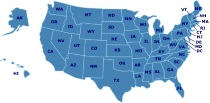
Looking for Another State?
Featured Resources
As an Amazon Associate, we earn from qualifying purchases. We get commissions for purchases made through links on this site.

Don't Waste Your Time Homeschooling: 72 Things I Wish I'd Known
Traci Matt, a veteran homeschool mom helps you make the most of your homeschooling efforts. She takes a look back at 20 years of successes and challenges, offering tested strategies to assist you on your home education journey. This book will help you learn ways to keep a peaceful home, stay out of the isolation trap, practice self-care, learn how to live with teens, and respond to the questions of others.

The First Year of Homeschooling Your Child: Your Complete Guide to Getting Off to the Right Start
An increasing number of parents are turning to homeschooling. This guide helps those parents to determine what are the best first steps to take, how to define your educational philosophy, and the best approach for your children. Included is a discussion of how to choose curriculum, assess progress, and stay within the legalities of your state.

Minds More Awake: The Vison of Charlotte Mason
Anne E. White explores what is known as the Charlotte Mason, based on the educational philosophy of the 19th century British educator. The goal is to set a child on the path to an intentional, purposeful life. White explores both the practical and philosophical understanding the Mason's practices. White includes lots of examples of how to use these ideas in your own homeschooling.

So You're Thinking About Homeschooling: Fifteen Families Show How You Can Do It
Confused and intimidated by the complexities of homeschooling, many sincere parents never get past the "thinking about it" stage. Now Lisa Whelchel - herself a homeschooling mother of three - introduces fifteen real families and shows how they overcome the challenges of their unique homeschooling situations. This nuts-and-bolts approach deals with common questions of time management, teaching weaknesses, and outside responsibilities, as well as children's age variations, social and sports invol...
Pecci Reading Method: At Last! A Reading Method for Every Child
At Last! A Reading Method for Every Child offers a balanced approach with intensive phonics and literature-based reading instruction. This is a simple method of teaching reading, with lots of supplemental materials. Get product information here.