How To Homeschool
Homeschooling offers parents the flexibility to choose the best educational method for their children. The spectrum of homeschooling models runs from unschooling, also called self-learning or child-led learning, to a structured "school at home" type of environment. In addition, there are many schools of thought, fostered by educators such as Raymond and Dorothy Moore, John Holt, Maria Montessori, Charlotte Mason, and many other. Explore the different methods and styles of homeschooling. You'll be inspired, intrigued, and equipped with the tools to make the best educational choices for your own family.
Methods
Homeschoolers cover an entire spectrum of different educational methods. On the one end, you have unschoolers, families that believe in self- or child-led learning. Relying on real world experiences, they learn by living. On the other end of the spectrum, you find parents who have "school at home." They may set up a classroom environment, use structured curriculums, and rely on schedules to keep things moving smoothly. And of course, there is everything in between. There are as many different ways to homeschool as there are homeschoolers. Explore the different methods, ideas, and approaches that make the homeschooling experience so rich.
Homeschool Curriculum
There is a smorgasbord of choices when deciding on curricula for your family. It is often trial and error until you find what works best for you and your child. We offer you a complete look at the curriculum choices available.
Teaching Aids
Past the basics, teaching aids, manipulaties, games, and toys can make learning more fun. There are many innovative learning tools and educational games to choose from. We've compiled many of the best here.
Testing
Testing is a requirement in many states. We make it easy to comply with testing requirements by gathering information and resources for testing services all in one place.
Online Resources
Are you looking for free worksheets? Want to find online educational games? Do you need a unit study? Here is the place to find them all. From online lesson plans to reading lists to academic and content standards, you'll find tools that will help you successfully homeschool.
What's Popular
TriCities Family Unschooling Network
TriCities Family Unschooling Network welcomes unschoolers, unschool-learning, and unschool-curious in the Tri-Cities area of East Tennessee and Southwest Virginia.
Standards of Learning: Instruction, Training, and Assessment Resources
SOL Teacher Resource Guides for the following subjects: History and Social Science, Mathematics, English, Science, Foreign Language, Art & Music, and Health/PE/Driver Education.
Appalachian Regional Cooperative
Appalachian Regional Cooperative is an inclusive group of homeschoolers in Maryland, Virginia, Pennsylvania and West Virginia.
Homeschool Testing & Assessment Information
An overview of the testing and assessment requirements for homeschoolers in Virginia.
Testing and Assesments FAQ
Find answers to your questions about homeschool evaluation and testing in the state of Virginia.
Evaluating Our Homeschooled Children
We've seen the various ways in which the state determines "achievement" and "progress" in a child's education both in the public school setting and the homeschooling requirements. Those options seem to be only snapshot glimpses into a child, without providing a full and true representation of any given child's scope of knowledge and learning. Tests are especially flawed in this area, yet provide one of the easiest and cheapest means of fulfilling the state requirement for "showing progress" in h...
Pros & Cons of Standardized Testing and Portfolio Evaluations
These are some pros and cons of meeting Virginia's August 1 requirement with standardized testing or a portfolio evaluation, the two most common methods. In considering the choices, keep in mind that the home instruction statute does not specify credentials for a test administrator or other evaluator and this is resigned to "the judgement of the division superintendent." Those new to homeschooling are apprehensive about this issue; those new to homeschooling in Virginia are also apprehensive abo...
Blue Ridge Family Unschoolers Network (FUN)
Blue Ridge FUN is an inclusive support group of homeschooling families. All homeschoolers are welcome, without bias to style of homeschooling, choice of curriculum, or personal beliefs. Blue Ridge FUN members live and learn in a large geographical area of Virginia including the following cities and counties: Amherst, Bedford, Botetourt, Lynchburg, Campbell, Floyd, Franklin, Henry, Patrick, Roanoke, Rockbridge, and Salem.
Woodbridge-Springfield Homeschool Group
Woodbridge/Springfield Homeschool Group is an inclusive list for homeschoolers in the northern Virginia area to chat, find support and meet others, and those who are looking for information about homeschooling. This is an inclusive list and is made up of unschoolers, eclectic, and relaxed homeschoolers. This is a regional offshoot of the NovaUnschoolers Group.
Charlotte Mason in VA
This is a group for families living in Virginia who are using the Charlotte Mason Method and homeschooling.
Central VA Unschoolers
This group is for Unschoolers in Central Virginia to receive support, share ideas, and chat.
Ashburn-Sterling Homeschoolers
Ashburn-Sterling Homeschoolers is an inclusive, relaxed homeschooling support group for those living and hsing in or near Ashburn or Sterling. They have a monthly support group meeting and a weekly park day. This group is affiliated with NovaUnschoolers.
CM Families of the South
The purpose of this loop is to encourage homeschooling families living in the Southern states who are trying to incorporate the philosophy of Charlotte Mason in their homes in their efforts to raise their children with an enthusiasm for learning.
Nova Unschoolers
NovaUnschoolers is an inclusive list for homeschoolers in the northern Virginia area to chat, find support and meet others, and those who are looking for information about homeschooling.
Northern Virginia Catholic Charlotte Mason - NoVaCCM
A group for families in the Northern Virgina area interested in Catholic Charlotte Mason home education. The group will share ideas online and hopefully plan monthly get togethers.
Resources
Total Language Plus
Total Language Plus is an innovative curriculum focused on teaching thinking and communication skills using literature as a base. The authors believe an integrated system is more efficient than a fragmented approach, discovery style learning is the most effective and learning should be enjoyable. The "discover, do, drill" method is employed throughout the TLP program with activities focusing on thinking skills. These comprehensive novel studies cover spelling, grammar, punctuation, vocabulary, analytical and critical thinking, comprehension, writing, listening, and field trips and projects.

Idea Book For Cuisenaire Rods At The Intermediate Level
Grades 2-5. Idea Book designed for use with Cuisenaire Rods.

Smart Mouth
Ages: 8 years and up; For 2 or more players
Smart Mouth is a quick-thinking shout-it-out hilarious word game that helps build vocabulary skills. It includes variations of the rules for category play and for younger players. Players slide the Letter Getter forward and back to get two letters. The first player to shout out a word of five or more letters using those letters wins the round. The game includes tips for teachers. This is a fun game to play with children and adults together.

Catholic Home Schooling: A Handbook for Parents
Mary Kay Clark, the director of the accredited and successful Seton Home Study School shows parents why and how to teach their children at home, giving scores of practical examples and setting forth the spiritual, moral and academic advantages. The book includes chapters by several experts and covers Catholic curriculum, textbooks, Catholic family life, legal aspects, discipline, socialization, home management, using computers, children with learning disabilities, single-parent home schooling, the father's role, Catholic home schooling support groups, and much more. Perfect for mothers who are considering home schooling, or who want to convince their husbands or relatives that home schooling is a good idea. Parents already know the problems in the schools (both public and Catholic). This book gives the solution! A tremendously encouraging, uplifting and practical handbook.

Maria Montessori: Her Life and Work
Maria Montessori is important background reading for parents considering Montessori education for their children, as well as for those training to become Montessori teachers. The first woman to win a degree as a Doctor of Medicine in Italy in 1896, Maria Montessori's mission to improve children's education began in the slums of Rome in 1907, and continued throughout her lifetime. Her insights into the minds of children led her to develop prepared environments and other tools and devices that have come to characterize Montessori education today. Her influence in other countries has been profound and many of her teaching methods have been adopted by educators generally. Part biography and part exposition of her ideas, this engaging book reveals through her letters and personal diaries Maria Montessori's humility and delight in the success of her educational experiments and is an ideal introduction to the principals and practices of the greatest educational pioneer of the 20th century.
The new introduction to Maria Montessori: Her Life and Work by Lee Havis, executive director of the International Montessori Society, discusses the changes that have taken place in Montessori education within recent years.
An updated appendix of Montessori periodicals, courses, societies, films, and teaching materials.
A revised bibliography of books by and about Maria Montessori.
The new introduction to Maria Montessori: Her Life and Work by Lee Havis, executive director of the International Montessori Society, discusses the changes that have taken place in Montessori education within recent years.
An updated appendix of Montessori periodicals, courses, societies, films, and teaching materials.
A revised bibliography of books by and about Maria Montessori.

Homeschooling: The Early Years: Your Complete Guide to Successfully Homeschooling the 3- to 8- Year-Old Child
Nothing beats seeking the voice of experience if you want to join the estimated 1 to 3 million parents who teach their children at home. Here's a guide that comes direct from the experts: a mother of two homeschooled, now-grown children and 83 homeschooling families she surveyed. Their stories make reading this starter kit on teaching ages 3 to 7 worthwhile. For those ready to take on what author Linda Dobson calls "a natural extension of being a good parent," the manual provides at-a-glance boxes of insightful anecdotes called "How We Did It," as well as lists at the end of each chapter of helpful books, magazines, Web sites, software, and computer message boards that connect homeschooling households. The straightforward writing covers the basics on reading, writing, and math; different teaching approaches; organizing a curriculum; even how to deal with skeptical relatives and spouses. There are no specifics on each states' homeschooling requirements, which vary widely. But as a primer for parents starting out, the book serves as a confidence builder and an inspiring how-to guide. --Jodi Mailander Farrell
Noah Webster's Reading Handbook
This is the historic text (originally called the Blue-Backed Speller) that has been updated to teach phonics/beginning reading. The blends and words in this reader are arranged to correlate with the sequence in which the special phonics sounds are taught. This reader is an invaluable teaching tool for children who need extra practice in the application of phonics rules. Find out more here.
Explode The Code
Explode The Code provides a sequential, systematic approach to phonics in which students blend sounds to build vocabulary and read words, phrases, sentences, and stories. Frequent review of previously learned concepts helps increase retention. Each workbook in this series contains exercises that incorporate reading, writing, matching and copying. The consistent format of the books helps facilitate independent work. This series includes primers—Get Ready for The Code, Get Set for The Code, and Go for The Code—which introduce initial consonant sounds. In addition, Beyond The Code provides a comprehension component introducing basic comprehension skills with phonetically controlled stories. You'll find product information here.
Montessori Reading
Montessori Reading is a beginning reading and writing program for elementary aged children. This series of books introduce phonetic letter sounds, phonogram combinations, reading simple sentences, and reading and writing words that name everyday objects, animals, etc. A teaching guide and a child's journal are included.
A History of Science
A History of Science is not a textbook, but is a guide to help parents and children study science through literature. It is intended for children in elementary grades.

Montessori Method
This book is Montessori's own exposition of the theory behind her innovative educational techniques. She shows parents, teachers and administrators how to "free a child to learn through his own efforts".
Phonics Pathways
Phonics Pathways begins with short-vowel sounds, slowly progressing to whole words, phrases, and sentences of gradually increasing complexity. Special teaching tips, extensive examples, and 100% decodable practice readings reinforce each lesson. Contains all spelling rules with a spelling index, spelling charts, spelling short-cuts, diacritical markings, and a wealth of inspirational proverbs. The new 9th edition of Phonics Pathways features many new enhancements including a wealth of reproducible games, a step-by-step spelling guide, teacher/student record sheets, a Dewey-the-Bookworm Bookmark and a new carefully-researched appendix detailing how Phonics Pathways aligns with most State Standards. Supplements to this program include The Train Game (to teach letter sounds), WordWorks (a set of cards used to reinforce phonics reading skills), and Blendit! (a set of eleven board games that reinforces knowledge of specific begining spelling patterns). For product information on Phonics Pathways, click here or visit their website.
KONOS
KONOS offers unit studies for homeschoolers, with a focus on character building and the study of history.

The Ultimate Book of Homeschooling Ideas: 500+ Fun and Creative Learning Activities for Kids Ages 3-12
Fun and Effective Home Learning Activities for Every Subject
As a homeschooling parent, you're always looking for new and creative ways to teach your child the basics. Look no longer! Inside this innovative helper, you'll find kid-tested and parent-approved techniques for learning math, science, writing, history, manners, and more that you can easily adapt to your family's homeschooling needs. And even if you don't homeschool, you'll find this book a great teaching tool outside the classroom. You'll discover fun and educational activities for kids ages 3 to 12, including how to:
·Create maps based on favorite stories, such as Treasure Island or The Wizard of Oz
·Make letters out of French fries as an alphabet learning aid
·Explore architecture by building igloos, castles, and bridges with sugar cubes and icing
·Review spelling words by writing them on the sidewalk with chalk
·And many more!
This comprehensive collection of tried-and-true—and generally inexpensive—ideas provides the best-of-the-best homeschooling activities that can be done anywhere, anytime, and by anyone.
As a homeschooling parent, you're always looking for new and creative ways to teach your child the basics. Look no longer! Inside this innovative helper, you'll find kid-tested and parent-approved techniques for learning math, science, writing, history, manners, and more that you can easily adapt to your family's homeschooling needs. And even if you don't homeschool, you'll find this book a great teaching tool outside the classroom. You'll discover fun and educational activities for kids ages 3 to 12, including how to:
·Create maps based on favorite stories, such as Treasure Island or The Wizard of Oz
·Make letters out of French fries as an alphabet learning aid
·Explore architecture by building igloos, castles, and bridges with sugar cubes and icing
·Review spelling words by writing them on the sidewalk with chalk
·And many more!
This comprehensive collection of tried-and-true—and generally inexpensive—ideas provides the best-of-the-best homeschooling activities that can be done anywhere, anytime, and by anyone.
Sing, Spell, Read & Write
Sing, Spell, Read & Write is a phonics-based program that uses a 36-step program of carefully sequenced steps to teach reading, writing, and spelling. More product information can be found here.
Shurley English
Shurley English maintains that effective instruction in English must be founded upon an understanding of how the parts of speech work together in a sentence. A good grammar foundation gives students the skills to improve writing. Grammar is the structure of sentence composition. Through grammar, students learn how to write, improve, and expand sentences. After they have an understanding of sentence structure, students are then able to combine sentences successfully into paragraphs, essays, and reports. For product information on Phonics Pathways, click here or visit their website.

Montessori Life
Designed to provoke thought, professional growth and provide a forum for discussion of major issues & ideas in education.
Progeny Press Study Guides for Literature
Progeny Press study guides include vocabulary exercises, comprehension, analysis, and application questions, introduction of literary terms, background information, discussion of related Biblical themes, suggestions for activities related to the reading, a complete answer key, and more. These are some of the titles available (grade range is in parentheses):
- The Adventures of Huckleberry Finn (9-12)
- The Adventures of Tom Sawyer (6-8)
- Amos Fortune, Free Man (5-7)
- Anne of Green Gables (5-8)
- Bears on Hemlock Mountain (1-3)
- The Best Christmas Pageant Ever (4-6)
- The Bridge (4-6)
- Bridge to Terabithia (6-8)
- The Bronze Bow (6-8)
- Carry On, Mr. Bowditch (9-12)5-7
- Charlotte's Web (4-6)
- A Christmas Carol (8-12)
- Clipper Ship (1-3)
- The Courage of Sarah Noble (1-3)
- The Cricket in Times Square (4-6)
- Crown and Jewel (4-6)
- A Day No Pigs Would Die (9-12)
- The Door in the Wall (4-6)
- The Drinking Gourd (1-3)
- Farmer Boy (4-6)
- The Fellowship of the Ring (9-12)
- Frankenstein (10-12)
- Frog and Toad Together (K-2)
- The Giver (7-9)
- The Great Gatsby (9-12)
- Hamlet (9-12)
- Heart of Darkness (9-12)
- Henry & Mudge in Puddle Trouble (K-1)
- The Hiding Place (6-8)
- The Hobbit (8-12)
- Holes (5-8)
- The Indian in the Cupboard (5-7)
- In the Year of the Boar and Jackie Robinson (4-6)
- Introduction to Poetry: Forms and Elements (8-12)
- Island of the Blue Dolphins (5-7)
- Jane Eyre (9-12)
- Johnny Termain (6-8)
- The Josefina Story Quilt (1-3)
- Julius Caesar (9-12)
- Keep the Lights Burning, Abbie (1-3)
- The Lion, Witch & Wardrobe (4-7)
- Little House in the Big Woods (4-6)
- Little House on the Prairie (4-6)
- The Long Way to a New Land (1-3)
- The Long Way Westward (1-3)
- The Lord of the Flies (11-12)
- Macbeth (9-12)
- The Magician's Nephew (5-7)
- Maniac Magee (6-8)
- The Merchant of Venice (9-12)
- The Minstrel in the Tower (2-4)
- Miss Rumphius (1-3)
- Mr. Popper's Penguins (3-5)
- New Coat for Anna (1-3)
- Number the Stars (5-7)
- The Old Man and the Sea (9-12)
- Oscar Otter (K-1)
- Out of the Dust (7-9)
- Out of the Silent Planet (9-12)
- Ox-Cart Man (1-3)
- Perelandra (9-12)
- Prince Caspian (5-7)
- The Red Badge of Courage (9-12)
- Redwall (5-9)
- The Return of the King (9-12)
- Roll of Thunder, Hear My Cry (6-8)
- Romeo and Juliet (9-12)
- Sam the Minuteman (1-3)
- Sarah, Plain and Tall (4-6)
- The Scarlet Letter (9-12)
- The Screwtape Letters (9-12)
- The Secret Garden (6-8)
- Shiloh (5-7)
- The Sign of the Beaver (5-7)
- Stone Fox (3-5)
- The Strange Case of Dr. Jekyll and Mr. Hyde (8-12)
- The Swiss Family Robinson (7-9)
- A Tale of Two Cities (9-12)
- To Kill a Mockingbird (9-12)
- Tuck Everlasting (6-8)
- The Two Collars (4-6)
- The Two Towers (9-12)
- Wagon Wheels (1-3)
- Where the Red Fern Grows (5-7)
- The Whipping Boy (3-5)
- The Witch of Blackbird Pond (5-7)
- A Wrinkle in Time (5-8)
- The Yearling (9-12)
The Mystery of History
The Mystery of History series is another alternative to traditional textbooks. The five volume set covers history from creation to present day, with a biblical worldview. This series is intended for grades K-8. Note that at this time, this series is not completed.
Montessori International
Montessori International is the magazine for all parents and teachers. Montessori International magazine is a high quality colour education magazine with a Montessori focus and a truly child-centred approach. The magazine is for Montessori parents, nursery owners, teachers, and students with an interest in Montessori education.
Learning Language Arts Through Literature
Learning Language Arts Through Literature is a fully integrated language arts program that teaches grammar, reading, spelling, vocabulary, writing mechanics, creative writing, thinking skills and more.

Children at Play : Using Waldorf Principles to Foster Childhood Development
Children at Play is an insightful exploration into the world of children's play and its tremendous significance in the shaping of each child's humanity. A mother and proponent of Rudolf Steiner's Waldorf system of education, author Heidi Britz-Crecelius offers practical suggestions and an up-to-date list of resources for today's families.

Pattern Blocks and Boards
This set of 10 simply designed colorful wooden blocks and pattern boards includes 100 blocks in six different shapes and colors. They help develop shape recognition and spatial relationship skills. The contents store neatly in a durable wooden case. This games was awarded the Scholastic Parent & Child's 2004 "Top 22 Toys that Make Kids Think" award.
MCP PLAID Phonics
MCP PLAID Phonics from Modern Curriculum Press incorporates best practices for teaching essential phonemic awareness and phonics skills with lots of flexibility. Find information on these products here.
Create! Press
Create! Press carries creative approaches to teaching creative writing and composition. Their products include the Create-A-Story game, Writing Adventures, Stepping Stones, and more.

LeapPad Game - Mind Wars Interactive Game
Bring a friend and try this brand new way to play with your LeapPad! Travel around the board in this fast-paced, head-to-head game as you hit your buzzer before your friend can steal your question! Be the first to close all five windows and you will become the Mind Wars master and learn important 3rd-5th grade skills in math, language and fine arts, science, history, and geography!

Teach Your Own: The John Holt Book Of Homeschooling
The classic work on teaching children at home, updated for today's new laws, new lifestyles, and a new generation of homeschooling parents. Today more than one and a half million children are being taught at home by their own parents. In this expanded edition of the book that helped launch the whole movement, Pat Farenga has distilled John Holt's timeless understanding of the ways children come to understand the world and added up-to-the-moment practical advice. Rather than proposing that parents turn their homes into miniature schools, Holt and Farenga demonstrate how ordinary parents can help children grow as social, active learners. Chapters on living with children, "serious play," children and work, and learning difficulties will be of interest to all parents, whether homeschooling or not, as well as to teachers. This new edition is supplemented with legal advice as well as a guide to cooperating with schools and facing the common objections to homeschooling. Teach Your Own not only has all the vital information necessary to be the definitive reference for parents teaching their own children, it also conveys John Holt's wise and passionate belief in every child's ability to learn from the world that has made his wonderful books into enduring classics.

The Letter Factory Game
Teaches Phonics! The race is on! With two games in one, children play together and learn letter names and sounds with actions and music. Wacky Professor Quigley guides players every step of the way so no reading is required! Games automatically adjust to skill level, to keep children learning at just the right pace! 2 Games in 1: Counting Colors & Letters: Learn letter names and sounds by matching color cards to move around the board. Leaping Letters: Listen to the name or sound and then find the card that matches it! Includes: interactive card reader, game board, 26 letter cards and 4 playing pieces.
H. A. Guerber's Histories
Helene A. Guerber wrote histories for grammar school children in the 19th century. Published in 1896 by the American Book Company, ‘Guerber’s Historical Readers in the Eclectic Readings Series’ were used to introduce children to the histories of the ancient and classical world. These engaging narratives are richly detailed accounts of the lives and times of the most important people of the period, arranged chronologically. The people are placed within the context of their times, and their history is presented with interesting background information so that the entire narrative flows as a single, unbroken story. Dates are given in the narrative where they are known; the pronunciation of place and personal names is carefully marked at its first encounter in the text; and illustrations abound. The text includes maps, a comprehensive timeline of all the persons and events encountered in the history, a comprehensive Recommended Reading list of wonderful historical fiction and non-fiction keyed to the chapters; and a complete bibliography and index round out the book. These books are intended as a child’s first introduction to history in grades 2-6 (the grammer stage). They make wonderful read alouds, and the Recommended Reading suggestions keyed to the chapters provide additional detail and fascinating excursions into topics introduced in the narrative, often with books children can look at or read on their own.
Learn and Do Unit Studies
Hands on unit studies on a variety of subjects, including science, life skills, arts and crafts, and animals and insects. Also offers free mini units available for download.
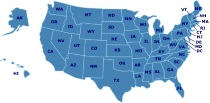
Looking for Another State?
Featured Resources
As an Amazon Associate, we earn from qualifying purchases. We get commissions for purchases made through links on this site.

Don't Waste Your Time Homeschooling: 72 Things I Wish I'd Known
Traci Matt, a veteran homeschool mom helps you make the most of your homeschooling efforts. She takes a look back at 20 years of successes and challenges, offering tested strategies to assist you on your home education journey. This book will help yo...

The First Year of Homeschooling Your Child: Your Complete Guide to Getting Off to the Right Start
An increasing number of parents are turning to homeschooling. This guide helps those parents to determine what are the best first steps to take, how to define your educational philosophy, and the best approach for your children. Included is a discuss...

Minds More Awake: The Vison of Charlotte Mason
Anne E. White explores what is known as the Charlotte Mason, based on the educational philosophy of the 19th century British educator. The goal is to set a child on the path to an intentional, purposeful life. White explores both the practical and ph...

So You're Thinking About Homeschooling: Fifteen Families Show How You Can Do It
Confused and intimidated by the complexities of homeschooling, many sincere parents never get past the "thinking about it" stage. Now Lisa Whelchel - herself a homeschooling mother of three - introduces fifteen real families and shows how they overc...
Pecci Reading Method: At Last! A Reading Method for Every Child
At Last! A Reading Method for Every Child offers a balanced approach with intensive phonics and literature-based reading instruction. This is a simple method of teaching reading, with lots of supplemental materials. Get product information here.