Legal/Homeschool Laws
Laws that regulate home education vary from state to state. It is important to understand the legal requirements in your state and to be aware of legislative and other legal issues that affect homeschoolers in your community. We've compiled resources that will help you become informed. Although homeschooling is legal in all 50 states, and the vast majority of homeschoolers face no problems, you may find that you need legal assistance at some point in your homeschooling career. We've compiled a list of resources to help you find the support you need. And if you'd like to become more involved in working towards homeschooling freedoms, we discuss some of the issues facing homeschoolers that we hope you find compelling.
State Laws
Read the laws regulating home education in Virginia and browse through the case law and legal opinions relating to those laws, along with government publications relating to homeschooling and summaries of the laws.
Forms
Which forms do you need to fill out? Where can you get them? Here is a list of useful forms for homeschooling in Virginia.
Legal Support
If you need legal information or have run into a legal situation regarding your decision to homeschool, these resources will be helpful.
Lobbying Groups
A listing of local and national lobbying groups and information on how you can become involved in the political process to ensure the freedom to homeschool is protected.
Attorneys
When searching for an attorney, it is helpful to know whether he or she has experience working with homeschoolers and is interested in protecting the right to homeschool.
Legal Issues
Is homeschooling legal? Which laws pertain to homeschoolers and which don't? How do homeschoolers protect their rights to freely educate their children and to preserve their privacy?
Government Resources
A listing of local and state government resources, including your state's Department of Education, school districts, and Senate and House of Representative information.
What's Popular
32.1-46. Immunization of children against certain diseases; authority to share immunization records.
Text of the code relating to immunization of children and exemptions from these requirements.
Home Educators Association of Virginia
Home Educators Association of Virginia is a member-supported, statewide, nonprofit homeschool association that operates from a biblical worldview. HEAV serves all homeschoolers and since 1983 has worked tirelessly to promote and protect homeschool interests in Virginia through information, legislation, and resources.
Johnson vs. Prince William County School Board
This court decision involved a dispute between Prince William County School Board and a family who homeschooled via the Religious Exemption.
Should You Homeschool Another Person's Child?
Imagine this situation: You are happily homeschooling your children. Your sister-in-law has said many times that she would love to be able to homeschool her children too, if only she and her husband didn’t have to work full-time. She wonders if perhaps you wouldn’t mind including her children in your family’s homeschooling. She would file the Notice of Intent with the local superintendent, but you would do the actual instruction in your home. You tell her you’d be happy to—the more the merrier! ...
Virginia Department of Education
This is the official website for the Virginia Department of Education.
Option 1 Notice of Intent (NOI) - Eclectic Curriculum
Sample of an option (i) NOI that has been accepted by Prince William County Public Schools.
VHEA-announce
List intended to distribute the Virginia Home Education Association's free biweekly updates, in order to disseminate legislative and other time sensitive information. This list is announcement only. VHEA's Legislative Reports report on legislative matters that could affect homeschooling, offering information on pending legislation.
Attorney General Baliles Nov 1984 Opinion
Families who homeschool based on the Religious Exemption may be interested to read a few Attorney General opinions that a school board has the right to review a family’s claim for Religious Exemption every few years or even annually. Religious beliefs, however sincere at a point in time, may change. Thus the school board’s recognition of an exemption could theoretically change as well. If so asked, the family could simply write to the school board, informing them that their status was unchange...
Notice of Intent to Provide Home Instruction
This is a slighty modified version of the standard form suggested by the Virginia Department of Education, which may used when providing notice of intent to homeschool with your local superintendent in accordance with the Home Instruction Statute [§22.1-254.1]. While using a form is not mandatory, it may expedite administration in some local school divisions.
Answering the CPS (Child Protective Services) Questions
Transcript of a talk given by Edwin Schuster of the Virginia Child Protective Services about the relationship between homeschoolers and CPS. The text is presented in question and answer format. Includes the rights that families have when contacted by CPS.
The Religious Exemption: Past, Present, and Future
Virginia offers a unique option to families who have religious objections to complying with the compulsory attendance statutes: the religious exemption. Explore the history of this exemption and consider the possibility of it being under threat today.
22.1-255. Nonresident children.
Any person who has residing with him for a period of sixty days or more any child within the ages prescribed in § 22.1-254 whose parents or guardians reside in another state or the District of Columbia shall be subject to the provisions of § 22.1-254 and shall pay or cause to be paid any tuition charges for such child that may be required pursuant to § 22.1-5 or shall return such child to the home of his parents or legal guardians.
Evidence of Progress
Will Shaw answers the question, "What happens if the local school division rejects the test, results of the test, or the portfolio?"
Attorney General Balilies May 1984 Opinion
Families who homeschool based on the Religious Exemption may be interested to read a few Attorney General opinions that a school board has the right to review a family’s claim for Religious Exemption every few years or even annually. Religious beliefs, however sincere at a point in time, may change. Thus the school board’s recognition of an exemption could theoretically change as well. If so asked, the family could simply write to the school board, informing them that their status was unchange...
Virginia Department of Education Public School Divisions
List of state school districts, including Superintent's name, address, phone number, and more.
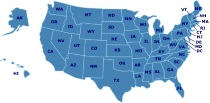
Looking for Another State?
Featured Resources
As an Amazon Associate, we earn from qualifying purchases. We get commissions for purchases made through links on this site.
English from the Roots Up
English from the Roots Up explores the Latin and Greek roots of words. Many people haven't realized how valuable the Latin and Greek vocabulary is in the formulation of the finely structured English vocabulary of today. Even learning a few Latin and ...

Great States Board Game
What is the capital of NJ? Where is the Football Hall of Fame? These are just a few of the hundreds of questions players are asked as they adventure around the USA discovering state attractions and landmarks, capitals, state abbreviations, state loca...

Responsible Driving, Student Edition
This easy-to-read book features explanations of safe driving techniques and is used in many states as a textbook for in-class driving instruction. It is a great learning tool for a new driver and a good refresher for the more experienced driver.

Creative Home Schooling: A Resource Guide for Smart Families
For a comprehensive guide to home-based education, that does not promote any particular curriculum or religious view, this is one book parents should buy! Parents will appreciate practical advice on getting started, adjusting to new roles, designing...

The Letter Factory Game
Teaches Phonics! The race is on! With two games in one, children play together and learn letter names and sounds with actions and music. Wacky Professor Quigley guides players every step of the way so no reading is required! Games automatically adjus...